
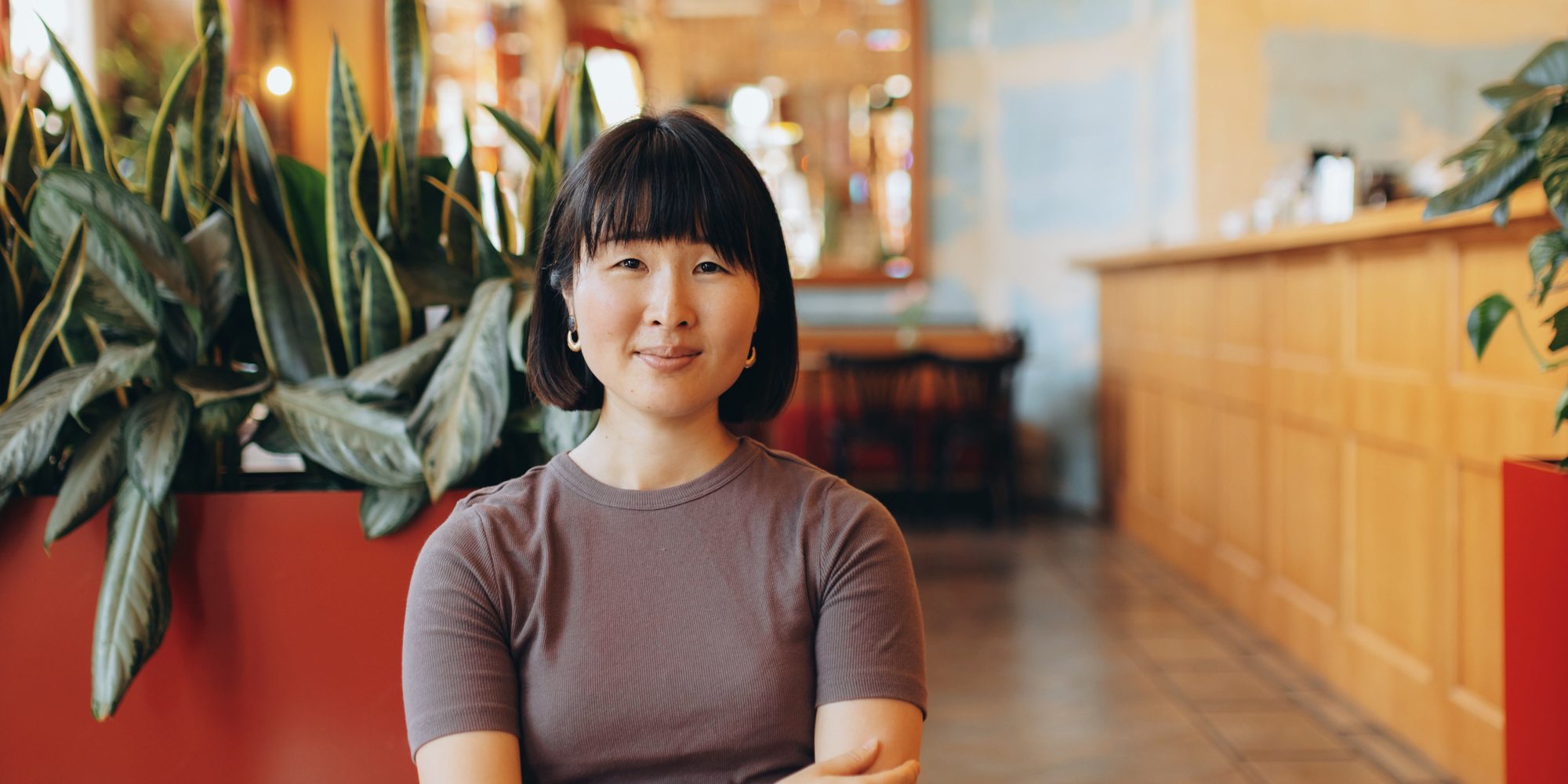
Sumire Sato: Where Influence Lives
Where Influence Lives
A clinical psychologist who has spent a decade working with people across cultures, and looking closely at what happens when the environment around them becomes part of the problem.
In a local election in Kusatsu, Japan, a clinical psychologist stood for a seat on the city council. She was young, running with no party, for a council where women hold only one-sixth of the seats.
She lost by only five votes.
Sumire Sato’s account of why she ran is not about politics in the usual sense. The budgets that decide what mental health support exists, and who can reach it, are set in rooms that young people, women and marginalised communities are rarely in. She wanted to be in the room.
That is an unusual thing for a working therapist to do with her time, and it explains more about Sato than any list of credentials might.
Where the work started
Sato qualified inside Japan’s clinical psychology system, with master’s research on adolescent mental health, then passed a competitive civil service examination and went to work as a government clinical psychologist in the public system.
Her cases were the ones that arrive already at crisis: suicide prevention, child abuse, domestic violence, families coming apart, much of it inside child welfare centres and emergency shelters. She worked alongside multidisciplinary teams and government agencies, often under real institutional pressure. That experience shaped her clinical judgement: how to read a crisis quickly, work within a system, and hold both the individual and the structures pressing on their life.
Much of this early work was with adolescents whose difficulties, as she puts it, were “read as delinquency rather than distress.”
The same question in different places
Eight years ago, Sato founded a mental health NGO for young people in Japan, which she continues to lead. Its projects include Yancha dera, a temple-based youth programme designed as a place where teenagers can turn up as they are.
She later worked with the UN Refugee Agency’s Refugee Higher Education Program, providing psychological support to university students from refugee backgrounds who were continuing their studies in Japan on UN-supported scholarships.
Over time, the people she worked with became more geographically and culturally varied: immigrants, refugees, expatriates, women living within expectations they had not chosen, and people trying to make a life somewhere that still did not quite feel like home.
From the outside, these can look like separate areas of practice. Sato does not see them that way.
“The common thread was never the population,” she says. “It was that every person I sat with had been made small by the environment around them, and had stopped trusting what they felt.”
When leaving is also a loss
One of the ideas Sato returns to most often is cultural grief, the mourning that can follow leaving a culture, even when the move was voluntary and the new life is one a person wanted.
There is no funeral for this kind of loss, and often no single moment when it happened. You may simply find yourself without the shared understanding that required no explanation, the familiarity of knowing how things are done, or the sense of belonging that once happened without effort.
On paper, very little may appear to have gone wrong. A person moved abroad for work, education, a relationship or an opportunity they actively chose. They may be grateful for the life they have and still be grieving the one that became less accessible when they left, including the version of themselves who knew instinctively how to belong there.
That can make cultural grief difficult to recognise, including for the person experiencing it. In a clinical setting, the feelings may resemble depression or adjustment difficulties while the circumstances surrounding them receive less attention. For someone whose identity has developed across countries and cultures, Sato argues that those circumstances are part of understanding the distress itself. “Culture is clinical data, not background colour,” she says.
The language feelings live in
Sato is a native Japanese speaker who also works professionally in English. Beyond those two languages, she has studied 17 others, including Georgian, Russian, Turkish, Armenian, Greek, Arabic, Hebrew, Croatian, Korean and Thai.
Nobody takes up seventeen languages by accident. For a psychologist whose work is largely with people living between cultures, that interest sits very close to the work itself.
Writing about therapy conducted in a second language, Sato draws a distinction: “Your English is fluent. That isn’t the same as your grief being fluent in English.”
Someone can be perfectly capable of working, socialising and navigating daily life in a second language and still struggle to find words for a childhood memory, a family relationship or a feeling they first learned to name somewhere else.
Therapy can make that gap particularly visible. Describing shame or grief already asks something difficult of a person. Doing it in a language learned later adds the work of translation at precisely the moment when language may already be hard to find. Some things survive that translation easily. Others arrive changed, simplified or not at all.
What thirty-five countries taught her
Sato has trained, travelled or worked in more than thirty-five countries, including Denmark, the United Kingdom, the United States, the Philippines, Nepal, Rwanda and Germany.
When she travels, she seeks out the people already doing the work there. She has learned alongside practitioners in refugee and immigrant services, youth work, psychotherapy, social welfare and community mental health. Along the way, she has seen how differently cultures think about family, independence, work, belonging and even what it means to be well.
Sato has written that being outside her comfort zone keeps her thinking flexible. Her clinical practice has travelled with her. It is now entirely online, stretches across time zones and has grown to more than 3,000 sessions over a decade of remote work.
She writes frequently too, publishing essays on loneliness in Norway, on the Japanese habit of perseverance without a destination, and on what it took her to speak up. Her writing moves through loneliness, belonging, cultural expectations and the experience of living somewhere that asks something different of you. As you read Sato’s writing, you get the sense of someone thinking in public without needing every question to have an answer.
The two tracks
Sato describes her work as running on two tracks at once. One is sitting with a single person for fifty minutes. The other is concerned with the conditions that shape what happens outside that room: immigration systems, workplace cultures, gender expectations, public policy, and who gets a say in the decisions that affect people’s lives.
“Treating the individual and ignoring the structure is half the job,” she says.
For Sato, the effects of those structures are personal. They determine what support someone can reach, what is expected of them, how secure their life feels and how much room they have to make choices for themselves. Therapy may happen between two people, but the circumstances a person brings into the room were not necessarily made there.
Her run for city council in Kusatsu was one attempt to work on that second track. Losing by five votes did not end the possibility of a political career. Several politicians approached her afterward and encouraged her to run for Japan’s national parliament. As a young woman entering a political world still largely occupied by older men, she had attracted attention simply by running.
She considered it. A senior politician arranged for her to meet an influential political leader who had been described to her as flexible and open-minded. What Sato encountered made her question the political culture she would be entering and the kind of power it offered. She declined.
What she chose instead was closer to the ground. She kept seeing clients. She kept working with young people and people living between cultures. She kept putting herself in unfamiliar places, learning from the people already working there and paying attention to lives shaped by systems that are easiest to understand from the inside.
There is less distance in that kind of work, and considerably less comfort. It has taken her through thousands of clinical sessions and into languages and cultures she did not grow up knowing. The scale is different from political office, but it is no less ambitious.
Sato went into politics because she wanted to change the structures around people’s lives. She came away with a different idea of where her influence might lie: close enough to see what those structures actually do to the people living inside them.
To work with Sumire Sato, visit sumiresuusato.com, or book with her on Trova Health.
Join Sumire’s upcoming class for practitioners: The Invisible Load: Recognizing and Treating Cultural Grief in Your International Clients on 18 November 2026.
Published by Trova Health, a clinician-built global network of mental health and wellness professionals working to make culturally informed care more accessible worldwide. The Provider Spotlight series shares the stories of clinicians who bring something distinctive to their work, wherever in the world they practise.
Frequently asked questions
What is cultural grief? Cultural grief is the mourning that can follow leaving a culture, including when the move was voluntary and went well. What is lost may be shared understanding, automatic belonging, cultural fluency and the sense of knowing instinctively how to live in a place. Because those losses do not necessarily register as losses on paper, they can be difficult to recognise, including for the person experiencing them.
What is the difference between cultural grief and depression? Depression is a clinical diagnosis with defined criteria. Cultural grief describes a mourning response connected specifically to cultural loss and displacement. The two can overlap, and feelings associated with cultural grief can resemble depression or adjustment difficulties. Distinguishing between them means understanding the client’s cultural circumstances rather than considering symptoms in isolation.
What does a cross-cultural psychologist do differently? A cross-cultural psychologist considers how culture shapes the way distress is experienced and expressed, what a person understands a healthy self to be, and which feelings they learned were acceptable to express. Sumire Sato works this way with expats, immigrants, refugees and people living between countries.
Should I have therapy in my first language or in English? There is no single right answer. Some people are comfortable doing therapy in a second language, while others find that certain memories, relationships or emotions are easier to access in their first language. Sato works in Japanese and English and writes about the difference between being fluent in a language and being able to express grief in it.
Can online therapy work across time zones? Online therapy can offer continuity for people whose lives take them between countries or who may not have access to an appropriate therapist locally. Sato has practised entirely online for a decade, has completed more than 3,000 sessions and works with clients across time zones.
Who does Sumire Sato work with? Sato works with adults and adolescents living between cultures, including expats, immigrants, refugees, foreigners living in Japan, Asians living abroad and women in environments where expression is constrained. Her areas of focus include cultural grief, identity and belonging, trauma, loneliness, women’s mental health and psychological safety.
What are her credentials? Sato is a licensed clinical psychologist trained in Japan, with a master’s in clinical psychology from Kyoto Koka Women’s University and research on adolescent mental health. She has worked as a government clinical psychologist in Japan’s public mental health system and with the UN Refugee Agency’s Refugee Higher Education Program, and has trained, travelled or worked in more than thirty-five countries.